Kiwicha (amaranth)
Andean amaranth: 13.5-15.9% protein with an amino acid profile that exceeds FAO requirements, gluten-free and with a kitchen trick that almost nobody knows.
What it is good for
- 16% protein
- High in lysine
- Gluten-free
- Improves concentration
How to use it
Toasted as a cereal, as flour in baking, or sprouted.
How much
¼ cup a day, toasted.
Watch out
Toast before eating for better digestion.
What it is and where it comes from
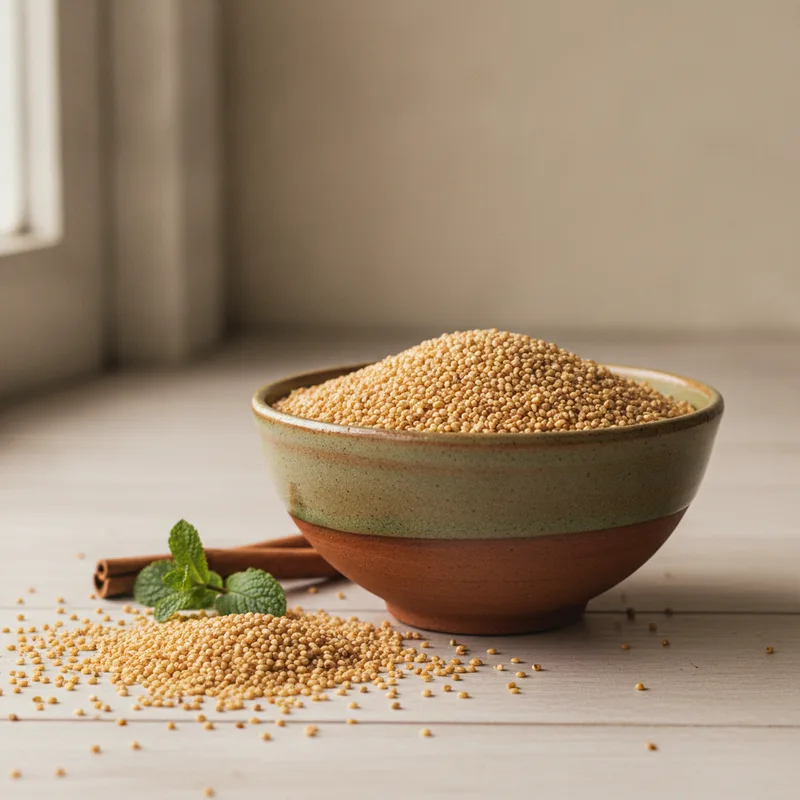
Kiwicha (Amaranthus caudatus) is Andean amaranth, a pseudocereal with a tiny seed (smaller than quinoa) that the Incas grew alongside corn and potatoes. In Mexico its cousin Amaranthus cruentus is the one used for alegría, the sweet made of popped seeds with honey.
Like quinoa, it is not a cereal: it is the seed of a broad-leaved plant, so it has no gluten and no relation to wheat.
What the evidence says about its protein
The Andean grains (quinoa, cañihua and kiwicha) have between 15.0% and 16.3% protein on a dry basis, well above rice (7.0%) and corn (9.0%). Analyses specific to amaranth put it at 13.5-15.9%.
What matters is not only how much protein but what kind: the reviews describe a balanced essential amino acid profile, with levels of lysine, methionine and threonine that meet or exceed FAO requirements for high-quality proteins. Lysine is the amino acid where cereals fall short, and amaranth is a notable source of it.
It also brings phenolic compounds, squalene, folate and tocopherols. Squalene is interesting because its classic commercial source is shark liver, and amaranth is one of the few concentrated plant sources.
The kitchen trick almost nobody knows
Kiwicha pops like popcorn, and that is its best use. In a very hot, dry pot (no oil), add a tablespoon of seeds, cover and shake. In 20 or 30 seconds they pop and look like microscopic popcorn.
The key is a small amount and a pot that is really hot: if you add half a cup at once, the seeds at the bottom burn before the ones on top pop. Do it one tablespoon at a time.
Popped, it goes on yogurt, on salad or mixed with honey. It is the only way kids like it.
Cooked, and why it sometimes goes wrong
To cook it, use 1 part kiwicha to 2.5 of water, 20 minutes over low heat. And it has to be said: it turns out sticky, almost like a soft polenta. It is not a cooking mistake, it is its texture.
That is why it works better in dishes where that texture adds something (a cream, a breakfast porridge, a pudding) and worse where you expected separate grains. For separate grains, quinoa.
How much and with what
Half a cup cooked or two tablespoons popped, about three times a week, adds it to the rotation without pushing anything out.
With legumes it works just like quinoa: the lysine amaranth has to spare complements what beans lack. With milk or yogurt, for breakfast, it makes the most of its creamy texture.
Where to find it in Chile
It is the hardest of the Andean grains to find. It is in health food stores, in shops selling Peruvian products and in bulk at La Vega market. Sometimes it is sold as 'amaranto' and sometimes as 'kiwicha': it is the same thing.
Frequently asked questions
Are kiwicha and amaranth the same thing?
Yes. Kiwicha is the Andean name for Amaranthus caudatus. In Chile it is sold under both names interchangeably.
How much protein does kiwicha have?
Between 13.5% and 15.9% according to analyses of amaranth, and the Andean grains as a group range from 15.0% to 16.3% on a dry basis, well above rice (7%) and corn (9%).
How do you pop kiwicha?
In a dry, very hot pot, with no oil, one tablespoon at a time, covered and shaking it. It pops in 20-30 seconds. If you add a lot at once, the seeds at the bottom burn first.
Does kiwicha have gluten?
No. It is the seed of a broad-leaved plant, not a cereal, so it works on a celiac diet.
Sources
- «Potential of Andean Grains as Substitutes for Animal Proteins in Vegetarian and Vegan Diets: A Nutritional and Functional Analysis», Foods, 2025
- «Nutraceutical value of kiwicha (Amaranthus caudatus L.)», Journal of Functional Foods
- Repo-Carrasco-Valencia R. et al., «Flavonoids and other phenolic compounds in Andean indigenous grains: quinoa, kañiwa and kiwicha»
This is information, not medical advice. If you have a health condition or take medication, talk to a professional before adding any supplement.
Other superfoods
Bring it into your day
In the app you snap a photo of your plate and get the calories and macros. Free, no card needed. The app is in Spanish.
Open the app