Lucuma (lúcuma)
The Andean sweetener that tastes like dulce de leche. What it really has (41.7% carbohydrates, 6.9% protein, carotenoids) and why 'low glycemic index' does not mean you can eat it freely.
What it is good for
- Low glycemic index
- Rich in niacin
- Natural vanilla flavor
- Energy without spikes
How to use it
Powder in desserts, ice cream, smoothies or coffee.
How much
2-3 teaspoons (10-15 g) a day.
Watch out
Store in a cool, dry place.
What it is and where it comes from
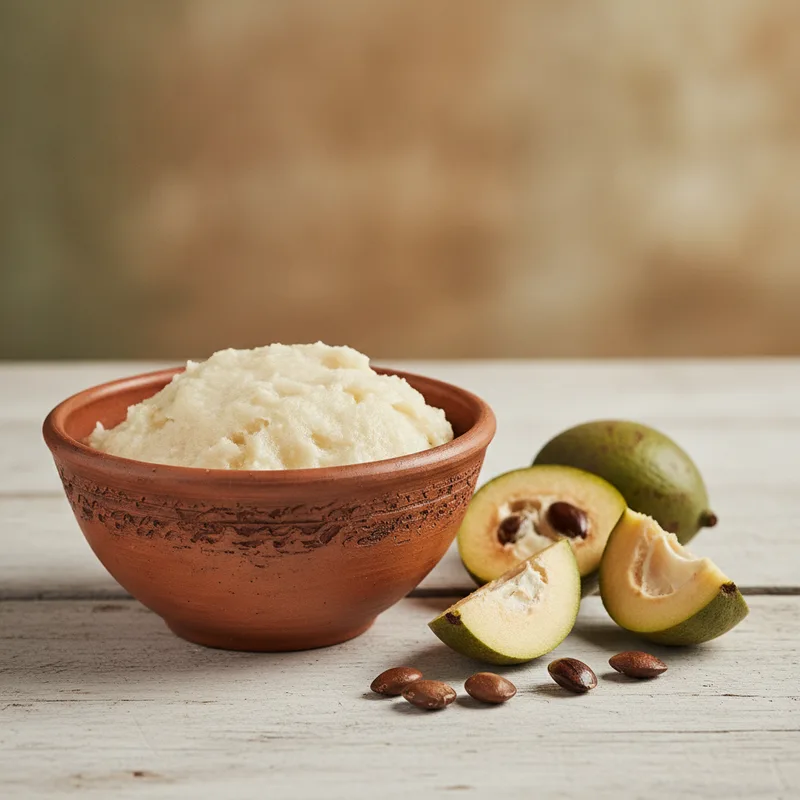
Lucuma, or lúcuma (Pouteria lucuma), is a fruit from the Andean valleys of Peru, Ecuador, Bolivia and northern Chile. Inside it is a deep orange, with a dry, floury texture, and its flavor recalls dulce de leche (manjar) with an undertone of sweet potato and chestnut. In Peru it is the best-selling ice cream flavor, ahead of vanilla and chocolate.
Fresh, it is hard to find outside the area where it is grown, so what is sold is the frozen pulp or lucuma flour: the dried and ground fruit, which is the form used for sweetening.
What it has, in numbers
Composition analysis gives 41.7% carbohydrates, 2.4% dietary fiber and 6.9% protein. Studies of different biotypes also report significant amounts of sugars (119.4 to 344 mg of total sugars per gram of dry weight), organic acids, ascorbic acid, total phenols and total carotenoids.
Antioxidant assays identify polyphenols, flavonoids and carotenoids, and chemical characterization finds metabolites from the phenolic, flavonoid and polar lipid classes. Its orange color comes from beta-carotene, which is also where its vitamin A comes from.
About the 'low glycemic index'
This is the argument most used to sell it and the one most worth qualifying. Lucuma is described as having a low glycemic index, and in vitro studies have found antihyperglycemic properties (that is, measured in a test tube, not in people).
Two clarifications make the difference. First: a low glycemic index is not the same as low in sugar. Lucuma is 41.7% carbohydrates and a good part of that is sugars; it sweetens because it is sweet. Second: 'in vitro' is the start of a line of research, not its conclusion. The areas being studied (antidiabetic capacity, cardiovascular prevention) are still ongoing research.
The honest version is this: lucuma is a better sweetener than white sugar because it comes with fiber, carotenoids and polyphenols that sugar does not have. It is not a food you can eat freely.
How to use it in the kitchen
Lucuma flour replaces part of the sugar in smoothies, oatmeal, yogurt and baking. One to two tablespoons sweeten a whole smoothie, and add a dulce de leche flavor that goes especially well with banana, cacao and coffee.
It does not replace sugar one to one in baking: it sweetens less and adds starch, so if you swap all the sugar for lucuma the cake comes out dry and not very sweet. Replacing a third and adjusting the liquid works.
The frozen pulp is for ice cream, mousses and flans, where its floury texture turns creamy.
How much
One to two tablespoons of flour a day. Since it is a sweetener, the right question is not how much lucuma to add but how much sugar to replace.
Where to find it in Chile
The flour is in health food stores, in the health food aisle of large supermarkets and in Peruvian shops. The frozen pulp, in Peruvian shops and some supermarkets. In northern Chile you can sometimes find the fresh fruit in season.
Check that the label says 100% lucuma: some of what is sold as 'lucuma flour' comes mixed with sugar or maltodextrin, which is exactly what you were trying to avoid.
Frequently asked questions
Can lucuma be used to sweeten without sugar?
It sweetens, but it is not sugar-free: it is 41.7% carbohydrates and a good part of that is sugars. It is better than white sugar because it comes with fiber, carotenoids and polyphenols, not because it does not sweeten.
Does lucuma have a low glycemic index?
It is described that way, and studies found antihyperglycemic properties in vitro, that is, in a test tube. A low glycemic index does not mean low in sugar, and in vitro work is the start of a line of research, not its conclusion.
Can you replace sugar with lucuma in baking?
Not one to one: it sweetens less and adds starch, so the result comes out dry and not very sweet. Replacing a third of the sugar and adjusting the liquid works well.
What does lucuma taste like?
Like dulce de leche with an undertone of sweet potato and chestnut. It goes especially well with banana, cacao and coffee.
Sources
- Fuentealba C. et al., «Characterization of main primary and secondary metabolites and in vitro antioxidant and antihyperglycemic properties in the mesocarp of three biotypes of Pouteria lucuma», Food Chemistry, 2016
- «Pouteria lucuma Pulp and Skin: In Depth Chemical Profile and Evaluation of Antioxidant Activity», Molecules, 2021
- «A Comprehensive Analysis of the Nutritional Value, Antioxidant Potential and Fatty Acid Composition of Lucuma (Pouteria lucuma) Fruit», 2025
This is information, not medical advice. If you have a health condition or take medication, talk to a professional before adding any supplement.
Other superfoods
Bring it into your day
In the app you snap a photo of your plate and get the calories and macros. Free, no card needed. The app is in Spanish.
Open the app