Buddha bowl with sacha inchi and Andean tahini
A bowl that is more a formula than a recipe. How to build it with what you have, why sacha inchi oil goes on raw, and the dressing that ties it together.
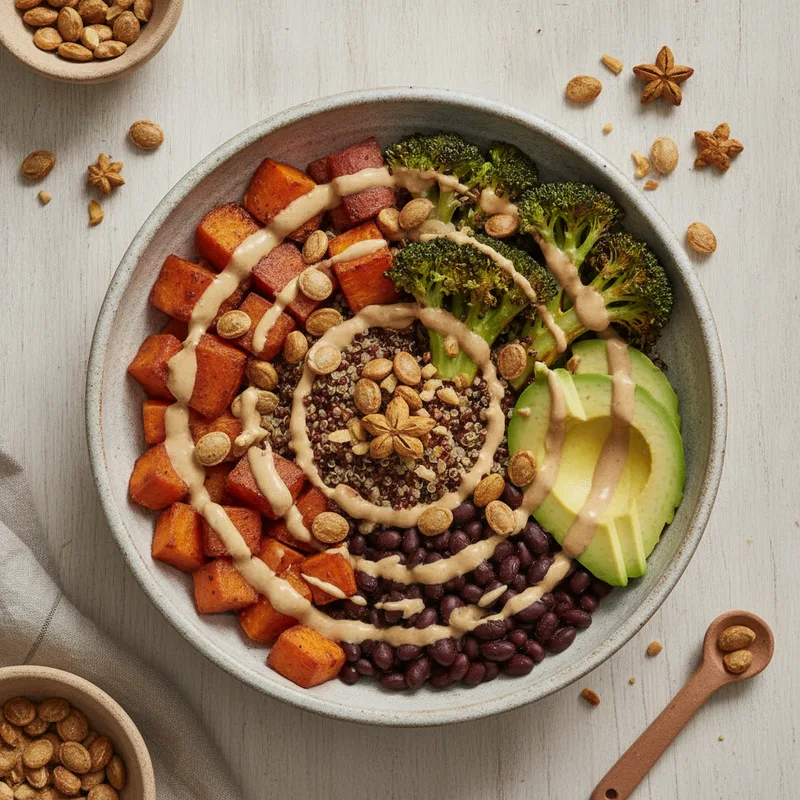
Ingredients
- 1 cup quinoa or brown rice
- 1 head of broccoli
- 1 sweet potato
- 1 beet
- 1 cup cooked chickpeas
- Leafy greens
- 2 tbsp tahini
- Juice of 1 lemon
- 1 tsp sacha inchi oil
- 2 tbsp toasted sacha inchi seeds
- Salt
Method
-
Cook a grain base (quinoa or brown rice) and let it cool slightly. Roast or steam vegetables such as broccoli, sweet potato and beet.
-
Make the dressing: mix tahini with lemon juice, a little water, salt and a teaspoon of sacha inchi oil until you get a creamy sauce.
-
Build the bowl in sections: grains, vegetables, leafy greens and chickpeas. Sprinkle with toasted sacha inchi seeds and pour the tahini dressing over it.
Why it works
A buddha bowl is not a recipe, it is a structure: a grain, a protein, raw vegetables, cooked vegetables, a fat and a dressing. Once you learn the structure, you never need the recipe again.
It works because each component brings something the others lack. The grain gives slow-digesting carbohydrate; the legume completes the amino acid profile the grain is missing; the raw vegetables add freshness and crunch; the cooked ones, sweetness and body; the fat makes the dish filling and helps you absorb the carotenoids in the orange vegetables.
Sacha inchi oil goes on raw
This is the detail almost nobody knows, and it is what makes it worth buying. More than 82 % of the fats in sacha inchi oil are polyunsaturated (46 to 51 % is omega-3 ALA, the highest percentage of any vegetable oil), and that is exactly what makes it terrible for heat: the more double bonds, the faster it oxidizes.
Frying with sacha inchi destroys what you went out to buy. It goes in the dressing, over the finished bowl. For cooking, use olive or sunflower oil.
And keep it in the fridge once opened. If it smells rancid or like old paint, it has oxidized: throw it out.
The formula, and how to fill it with whatever you have
Grain: quinoa, brown rice, cañihua, farro, couscous. Cooked ahead, cold or warm.
Protein: chickpeas, lentils, beans, tofu, hard-boiled egg, shredded chicken. If the grain is already quinoa, the legume is not mandatory but it adds.
Raw vegetables: greens, cucumber, tomato, red onion, grated carrot, red cabbage.
Cooked vegetables: roasted butternut squash, steamed broccoli, beet, cauliflower. Oven-roasted is better than boiled: they caramelize.
Fat and seeds: avocado, toasted sacha inchi seeds, sunflower, sesame, walnuts.
The dressing is half the dish
A bowl with the best ingredients and no dressing is a plate of loose things. The base formula: three parts oil, one part acid (lemon or vinegar), salt, and something that emulsifies and gives body.
That 'something' is what changes everything: a teaspoon of mustard, of tahini, of yogurt or of peanut butter. Tahini and lemon give you the dressing that makes almost any bowl work.
Make it in a jar and shake it. It keeps a week in the fridge and works for every bowl that week.
What goes wrong
The boring bowl. It lacks contrast: all lukewarm, all soft or all the same color. The quick rule is that every bite should have something crunchy and something creamy.
The cold, dry bowl. It needs dressing and it needs salt. Grains and legumes absorb much more salt than you think.
Rancid seeds. Seeds and nuts high in polyunsaturated fats (sacha inchi included) go rancid at room temperature. Keep them in the fridge.
How to store it
By components, not assembled. Each thing in its own container keeps three to four days, and assembling the bowl takes two minutes. Assembled with dressing, the greens wilt within hours.
To go: a tall jar with the dressing at the bottom, then the grain, then the firm vegetables and the greens on top. Shake it when it's time to eat and the greens don't arrive soggy.
Frequently asked questions
Can you cook with sacha inchi oil?
It is not a good idea. More than 82 % of its fats are polyunsaturated and they oxidize quickly with heat. It goes on raw in the dressing; for cooking, use olive or sunflower oil.
What goes in a buddha bowl?
A grain, a protein, raw vegetables, cooked vegetables, a fat and a dressing. It is a structure more than a recipe: once you learn it, you build it with whatever you have.
How do I make a dressing that works for any bowl?
Three parts oil, one part lemon or vinegar, salt, and a teaspoon of something that emulsifies: mustard, tahini, yogurt or peanut butter. Shaken in a jar, it keeps for a week in the fridge.
Can I leave the bowl assembled for the next day?
Better by components: each one keeps three or four days and assembling takes two minutes. Assembled and dressed, the greens wilt within hours.
The superfoods in this recipe
Similar recipes
Did you cook it?
In the app you save it, log it as one of the day's meals and see how it adds to your calories and macros. Free, no card needed. The app is in Spanish.
Open the app